A family chronicle of memory, migration, and the people we refuse to forget.
A 55-second film begins with five photographs of Garland and Iris, then continues into the animated portrait of Arie and Matje Kaslander. Names and biographical dates fade in with each portrait; the photographs themselves are undated. Narrated by M.W. Wilson, with instrumental music beneath his voice. English captions and a transcript are available. The final fifteen seconds contain AI-generated movement, ending with imagined smiles and a welcoming wave—an artistic interpretation rather than historical footage.Read M.W. Wilson’s narration
I wanted to understand their lives, what they hoped for, what they endured, and the world that shaped them.
Behind every name was a life as full and as uncertain as our own.
I do hope they look down upon us, glad that someone is looking for them.
Smiling. Waving. “We’re here. Over here.”
The film opens with instrumental music. The spoken reflection begins with the later portraits; music continues quietly beneath the narration.
Read the film’s names and dates
0–8 seconds: Garland and Iris Wilson. Married in 1941.
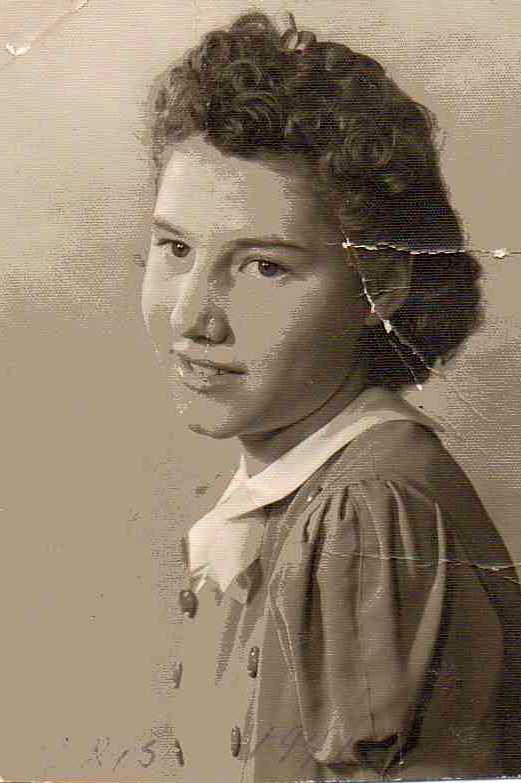
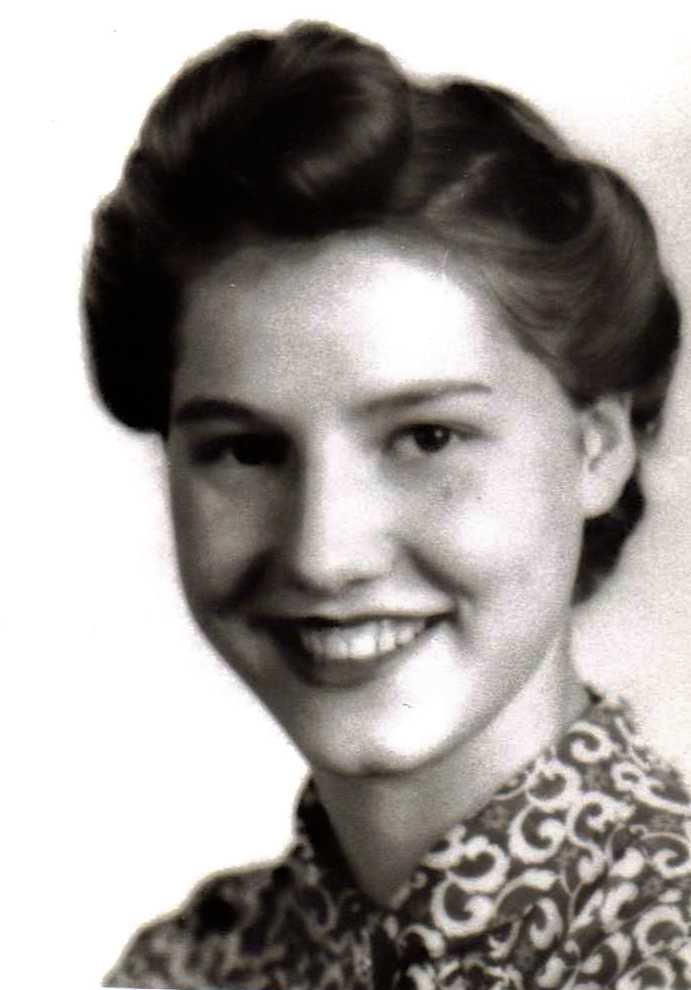
8–24 seconds: Iris Wilson. Years lived: 1926–1995.
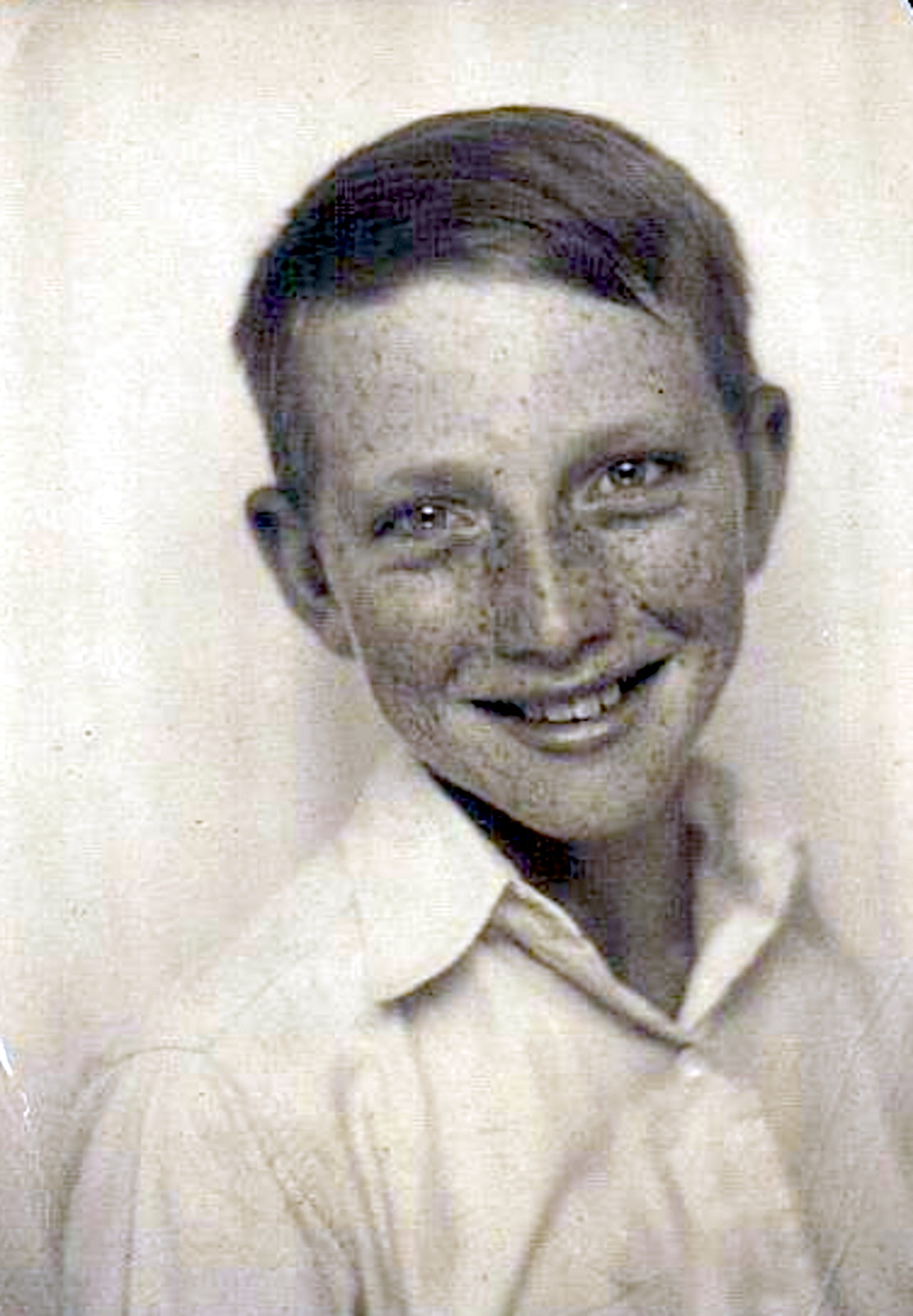
24–32 seconds: Garland Wilson as a boy. Years lived: 1922–2002.
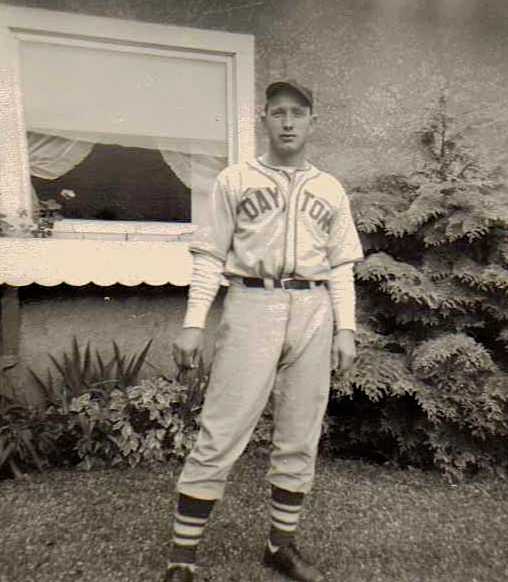
32–40 seconds: Garland Wilson in a Dayton baseball uniform. Years lived: 1922–2002.
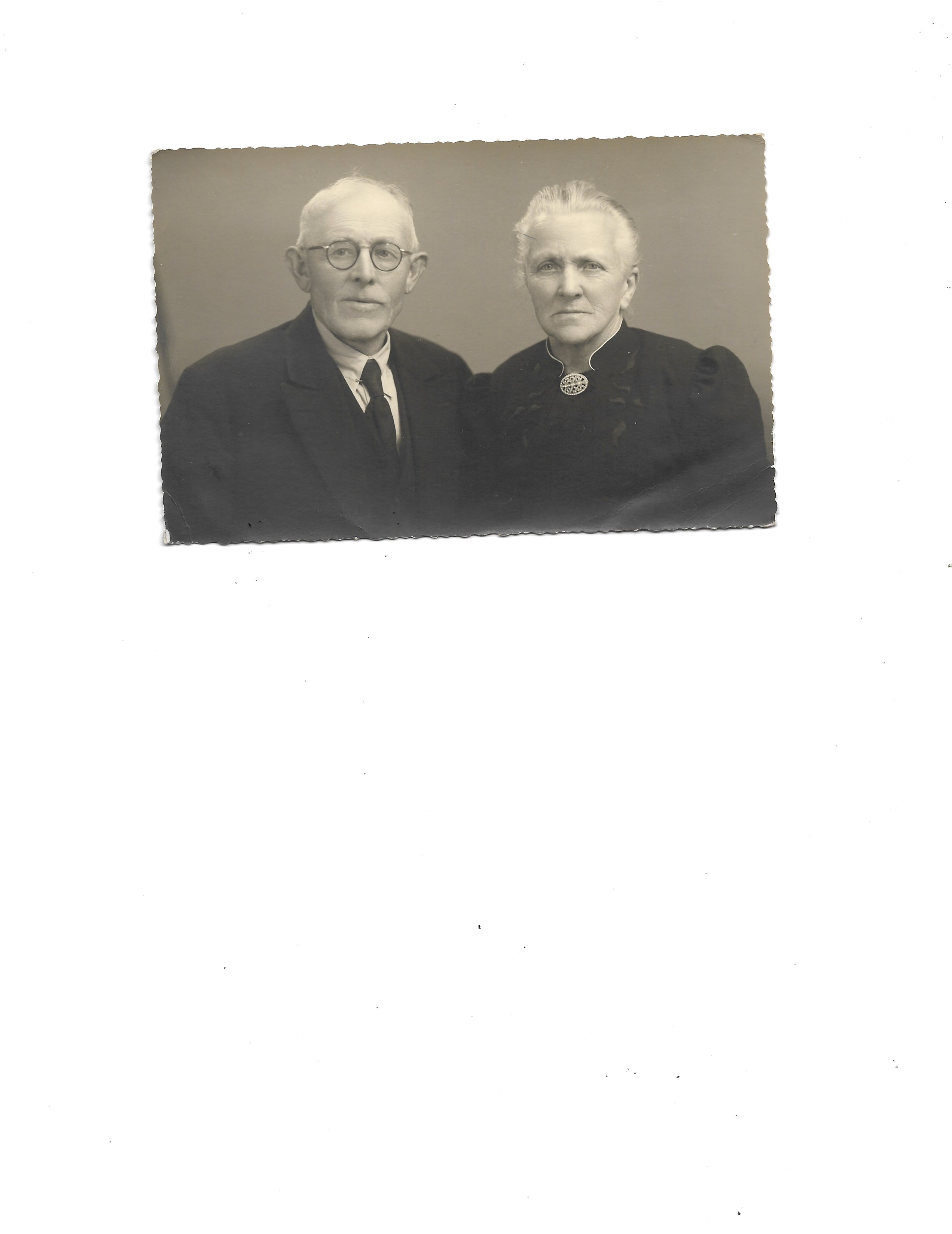
40–55 seconds: Arie and Matje Kaslander. Married in 1891.
These dates describe their lives, not when the photographs were taken. All six scenes use undated photographs. The final scene includes AI-generated smiles and a welcoming wave.
Prologue / Garland & Iris
The people who kept the names.
Garland’s cemetery work and Iris’s involvement in genealogy belong at the beginning of this story. Their grandson carries the work forward.
Iris’s obituary records years of activity in the Walla Walla Genealogy Society. Garland’s phrase gives this book its title.
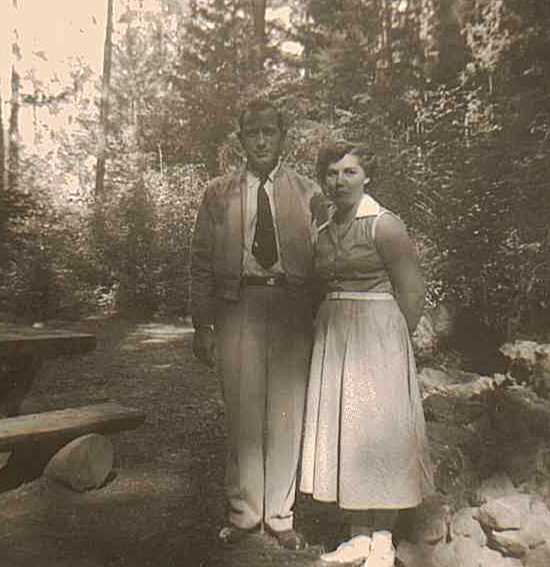
Prologue — Garland and Iris Wilson. Garland and Iris stand together outdoors among trees. Garland’s cemetery research and Iris’s years of genealogy-society activity are part of the inheritance behind the book.
Iris Wilson. A portrait of Iris, looking to the side.
Iris, smiling. Iris smiles toward the camera.
Garland as a boy. A portrait of Garland as a smiling boy.
Garland in Dayton uniform. Garland stands outdoors in a Dayton baseball uniform.
Dutch roots — Arie and Matje Kaslander. Elderly couple seated for a formal portrait, the man wearing glasses and the woman a brooch. Annie’s parents.
North Dakota — a home through the 1930s. A white farmhouse, horses, and open land. Jake, Emma, and their children lived here through the 1930s.
Late 1930s — the Vandersteen family. Five family members stand outdoors. Pictured are Gert, Annie, Margaret, John, and Maude.
1943 — the Kessler family. Seven adults and a baby gather outdoors. Pictured are Sally, Ernie, Jake, Bonnie holding Linda, Emma, Norman, and Margaret.
Late 1940s — Norman and Margaret’s home. An aerial photograph shows a house, fenced garden, and trees.
These scenes bring together different branches of the family, rather than tracing one person’s itinerary. Photo motion is a presentation effect. Music: “Across the Water,” an AI-generated instrumental sea-themed score with no spoken content.
The keepers of memory
Garland & Iris Wilson
Before this book, there were the people who kept asking, kept remembering, and kept the record. Garland and Iris are part of that beginning.
Garland and Iris togetherIris WilsonIris, smilingGarland as a boyGarland in Dayton uniform
Garland 1922–2002
Garland walked cemeteries, reconstructed records, and compiled regional genealogy sources. The lives behind the names mattered to him. His grandson remembers the affectionate phrase he used for the people he searched for: his “friends under the grass.”
Iris 1926–1995
Iris’s obituary records that she was active in the Walla Walla Genealogy Society for many years. It also remembers her baking, handiwork, and the things she made for friends and for people in local nursing homes. Her place in this story includes both the work of genealogy and the life around it.
1941 · Lewiston, Idaho Garland and Iris marry on August 2.Dayton, Washington A home in the years before their move.1955 · Milton-Freewater, Oregon Iris’s obituary dates their move to June.
Garland’s memorial program includes Tennyson’s “Crossing the Bar,” a poem that imagines a final voyage. The sea motif here echoes that family keepsake as well as the journeys threaded through the wider family history.
Sources: Iris Wilson obituary, Valley Times, January 18, 1995; Garland Wilson obituary and memorial program, 2002; Nez Perce County marriage record, Book 11, page 448. The book-title phrase follows the author’s narrative draft.
Where the research has taken us
Across borders. Back to 1597.
The research has pulled us back to Zeeland in 1597—and outward through Dutch towns, Black Sea settlements, Atlantic crossings, Canada, and American states. Countries, territories, and borders change; the work is to find the people within them.
These are places and periods reached by different branches of the research, not one continuous itinerary or a claim that every generation is already proved.
1597 · Zeeland
The earliest horizon
The research now reaches back to 1597 in Zeeland, in what is now the Netherlands. Later records draw us into Haamstede and Zierikzee between 1631 and 1658.
1768–1769 · Veere & Sommelsdijk
Names in a parish register
A marriage and a child’s baptism connect the search to these Dutch towns. A birthplace opens another path; a familiar name still needs an identity.
1785–1830 · Virginia & South Carolina
Land, households, and the record
American research reaches into Virginia land records in 1785 and South Carolina land and court records of the 1820s and 1830.
1836–1891 · The Netherlands
Families taking shape
Marriage records in Aalsmeer carry the work through the nineteenth century, including Arie Kaslander and Matje Vreeken’s marriage in 1891.
1882–1907 · The Black Sea & the Atlantic
A crossing, and the years before it
The search follows accounts of marriage and church life in Cataloi, now in Romania, and questions about Hoffnungstal. In 1907, a passenger list traces a Hess household from Bremen, Germany, through Baltimore, Maryland, toward Anamoose, North Dakota.
1910s–1930s · Canada & North Dakota
Another border, another home
Forestburg, Alberta, enters the research through an obituary and border records. Family photographs preserve a North Dakota home through the 1930s.
1941–1955 · Idaho, Ohio, Washington & Oregon
Within reach of memory
Garland and Iris marry in Lewiston, Idaho, in 1941. Another branch leads to Ohio in 1945. Dayton, Washington, and the couple’s 1955 move to Milton-Freewater, Oregon, bring the search closer to the lives remembered by their family.
Questions still open
Where the trail asks us to wait.
Some of the most revealing moments come when the next connection cannot yet be made. These open questions show what the work asks of us.
Is the child the same person?
A Sommelsdijk baptism records Jacomina in 1769. Connecting that child securely to the adult who later appears in the family’s records still requires evidence. A matching name is a beginning, not the missing bridge.
Which Hoffnungstal?
The Hess search encounters more than one settlement with this name. The passenger list gives a birthplace, but the exact community—and the connection to the proposed parents—remains unresolved. Finding the right place changes where we look next.
Where did the first colonial ancestors come from?
Wales, Ireland, England, Scotland—or somewhere else entirely? The American records give us places to begin, but the origins of the early colonial branches remain a question. A surname or a repeated family story cannot settle it; the challenge is to connect a person in the colonies to a life across the ocean.
What happens when the genetics don’t match the family stories?
Sometimes DNA evidence unsettles a story handed down through generations. What does the evidence establish, what remains uncertain, and how do we tell the story with care for the people involved? Biological ancestry, family relationships, and belonging can tell different parts of a life.
These questions remain part of the story as the research continues.
About the book
Ordinary lives. An inheritance of memory.
A name and a date tell us that someone lived. Friends Under the Grass asks what that life was like: what people feared, what they hoped for, and what was happening around them when their world changed.
Moving between intimate family stories and the wider historical record, the book explores how migration, war, disease, work, and loss shaped ordinary lives. It follows the questions that a family tree cannot answer on its own: why a household disappeared, why someone left everything familiar, or how those who remained found a way to go on.
When deaths cluster and whole families vanish from the record, the search reaches beyond the register. Was an epidemic or a wider pandemic passing through, its local toll unnamed or poorly recorded? What can the surrounding history reveal—and what must remain uncertain?
Garland Wilson called the people he searched for in cemeteries his “friends under the grass.” His grandson carries that work into a narrative of lives lived within history, bringing memory, photographs, letters, and archival research together to recover something of the world those people knew.
For anyone who has wondered what lies behind an inherited story, this is a book about how great events enter ordinary homes—and how their consequences echo through generations.
From the narrative draft
“I began it because I came to understand how easily ordinary people disappear.”
From the family album
A face. A name. A way back.
Arie and Matje Kaslander.
A photograph can hold an expression long after the voice is gone. The work begins again when someone remembers who is pictured—and passes that memory on.
The animated version of this portrait appears in the final fifteen seconds of the film above. The smiles and welcoming wave imagine the author’s hope: that those we search for might be glad to be found. Movement is AI-generated.
A first reading
The work of remembering.
A selection from “A Note from the Chronicler,” in the August 30, 2026 narrative transition draft. Text may change before publication.
Friends Under the Grass
Why I Am Keeping the Record
I did not begin this book because I believed my family was more important than anyone else's. I began it because I came to understand how easily ordinary people disappear.
The family I inherited was scattered by geography, divorce, estrangement, death, remarriage, adoption, uncertain parentage, financial loss, and, in some relationships, abuse. It was also held together by quieter things: letters, photographs, recipes, military papers, old books, church records, jokes, coins, addresses written on envelopes, stories repeated at tables, and the stubborn habit of one person asking another, 'Do you remember?'
Continue reading
My grandfather Garland was the genealogist. My father, Gary, became the academic historian. My aunt Deanna carried the genealogy forward in her own right, and her daughter Caroline also took part in the work. I have come to think of myself as the chronicler. None of us began on untouched ground. Each inherited questions, scraps, and unfinished work from somebody else.
M.W. Wilson · Work in progress
North of Then Press
The story is still being gathered.
Publication details will be announced as the book develops.